A Playground Full of Noise but Missing One Thing
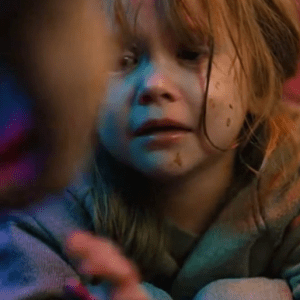
Every afternoon, she sat on the swings with her feet barely brushing the dirt. The playground buzzed with energy—kids running in packs, laughter bouncing off metal bars, sneakers pounding the ground. Everything about the place screamed fun.
Except for how alone she felt.
She watched other children race toward the slide and climb the monkey bars in loud, fearless groups. They shouted each other’s names, called out rules to games she wasn’t part of, and disappeared into moments that didn’t include her.
No one asked her to join.
She didn’t cry. She didn’t complain. She just swung gently, back and forth, pretending it didn’t matter.
But it did.
A Six-Year-Old Learning What It Means to Be Different
She was only six years old and small for her age. Her skin was very pale, catching the sunlight easily, and her hair was so white it almost shimmered. Her eyes were sensitive to the brightness of the day, hidden behind oversized pink sunglasses her mom always insisted she wear.
She had albinism.
To adults, it was simply a genetic condition. To other kids, it was something unfamiliar—and unfamiliar often means uncomfortable. Some stared. Some whispered. Most ignored her completely. Not because they were cruel, but because they didn’t know how to approach someone who looked different from them.
The result was the same.
Isolation.
She kicked the dirt lightly with her shoes, watching the shadows move beneath the swing. She told herself she didn’t care. That she liked being alone.
But loneliness has a way of settling in quietly, especially when you’re too young to name it.
When the Sound of Engines Changed the Day
That afternoon, a new sound rolled into the park’s parking lot.
Not laughter.
Not shouting.
Engines.
Low. Steady. Calm.
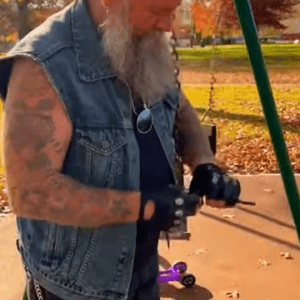
A small group of American bikers pulled in, chrome catching the sunlight, leather jackets worn soft by years on the road. They cut their engines and stretched, talking among themselves like this was just another stop on a long ride.
One of them noticed the girl almost immediately.
She wasn’t crying. She wasn’t waving for attention. She was just there—sitting still while the rest of the playground moved around her.
The biker nudged his friend. “See that kid?”
They watched quietly for a moment. Long enough to notice no one joined her. Long enough to see her glance toward the other kids, then quickly look away.
Video : BIKERS AGAINST CHILD ABUSE POKER RUN
Choosing to Walk Over Instead of Walking Past
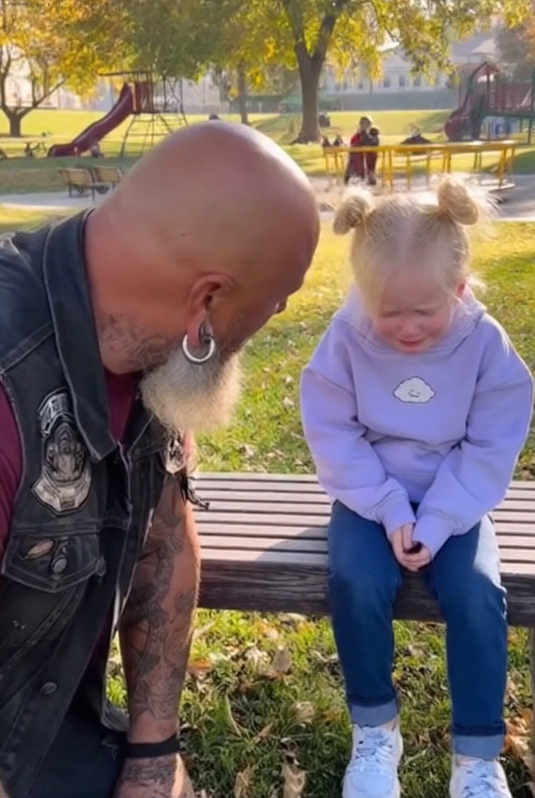
The lead biker stepped away from the group and walked toward her slowly, hands visible, careful not to startle her.
“Hey there,” he said gently. “Mind if we sit for a minute?”
She looked up, surprised. Adults usually talked around her, not to her. She nodded.
Another biker crouched nearby, smiling. “That swing looks comfy. You come here a lot?”
She shrugged. “Every day.”
There was no drama in her voice. Just routine.
“Do you play with the other kids?” the biker asked, keeping his tone soft.
She paused, then shook her head. “They don’t want to.”
No anger. No bitterness.
Just fact.
Something shifted among the bikers. The kind of understanding that doesn’t need explanation. The kind that comes from recognizing a feeling you’ve carried yourself before.
Turning the Focus Back to Fun
“Well,” one biker said, standing up, “that’s their loss.”
He walked toward the open space near the jungle gym and turned back to her. “You know how to play tag?”
She tilted her head. “A little.”
“Good,” he said, spreading his arms wide. “Because I’m terrible at it.”
Another biker laughed. “That’s true. You run like you’ve got bricks in your boots.”
They started moving slowly, making exaggerated motions, letting her control the pace. One biker pretended to trip. Another dramatically missed a tag and spun around like it was part of the game.
And then it happened.
She laughed.
Not the polite kind. Not the quiet kind.
A real laugh. Loud, surprised, and free.
When One Small Act Sparks a Bigger Change
She hopped off the swing and joined them, sunglasses slipping down her nose as she ran. The bikers played without hesitation, without awkwardness, without treating her like she was fragile.
The other kids noticed.
They slowed down.
They stopped.
They watched grown-ups in leather jackets running around, laughing, and playing tag like kids themselves.
One child stepped closer.
Then another.
Before long, the game grew. The girl wasn’t standing on the edge anymore. She was right in the middle of it, breathless and smiling, being tagged and tagging back.
No explanations needed.
No labels required.
Just play.
A Quiet Goodbye with a Lasting Message
When it was time for the bikers to leave, one of them knelt beside her again.
“You did great out there,” he said.
She smiled, cheeks flushed from running. “You came back.”
“Of course,” he replied. “You were already enough. We just wanted to remind you.”
The engines started again, rumbling gently as the bikers rode away. The sound faded into the distance, but the feeling stayed.
The girl didn’t return to the swing this time.
She stayed with the group.
Why Moments Like This Matter More Than We Think
This story isn’t just about bikers stopping at a park. It’s about inclusion in its simplest form. About seeing a child who feels invisible and choosing to engage instead of passing by.
Kids don’t always need lessons or speeches. Sometimes, they just need someone to show them—through action—that they belong.
That afternoon, a playground became more than a place to play. It became a reminder that difference doesn’t have to mean distance.
Video : BACA (Bikers Against Child Abuse) Ride 2025
Conclusion: When Belonging Begins with Being Seen
The bikers rode on, likely thinking little of what they’d done. But for a six-year-old girl who spent her afternoons watching from the sidelines, that moment mattered.
She went from sitting alone on a swing to laughing in the middle of a game. From being overlooked to being included. From feeling different to feeling welcome.
And sometimes, all it takes to change a child’s world is a few strangers who choose kindness—and decide to play.