A Familiar Street Where Trouble Often Goes Unnoticed
It happened outside a corner store, just as the sky faded from blue to gray. The kind of place kids linger after school, killing time before heading home. Adults passed through without slowing down, focused on errands, phones, and the pull of the evening ahead.
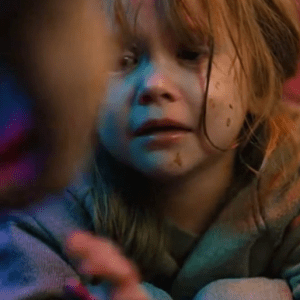
Near the wall stood a six-year-old boy with his backpack clutched tight against his chest. He wasn’t buying anything. He was waiting. Counting minutes. Watching shadows stretch across the sidewalk as he tried to decide when it might feel safe to walk home.
It didn’t.
When Older Kids Cross the Line
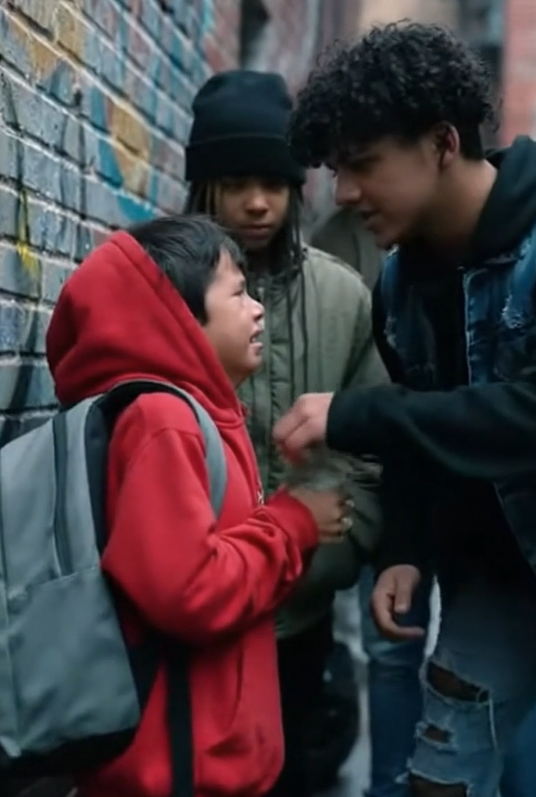
Three older kids stepped into his path. They were taller, louder, and confident in that careless way that comes from believing no one’s paying attention. One leaned in close enough that the boy had to tilt his head back just to meet his eyes.
“Got any money?” the older kid asked, smiling like it was a joke.
The boy shook his head.
Another laughed. “Check his pockets.”
The boy backed up until his heels hit the brick wall. His hands trembled as he held his backpack tighter. “Please,” he said, his voice barely audible. “I need it for the bus.”
Moments like this often end badly because they hide in plain sight. They don’t look dramatic from far away. They look like kids being kids—until you’re close enough to see fear.
The Sound That Changed the Moment
Then the sound shifted.
Not laughter.
Not traffic.
Engines.
Low. Steady. Controlled.
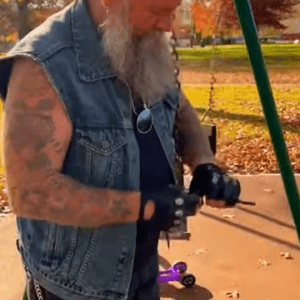
A group of American bikers rolled into the parking lot and stopped near the curb. Leather jackets creased by years on the road. Helmets came off. Boots hit the pavement with quiet confidence.
They didn’t rush.
They didn’t shout.
They noticed.
Why Awareness Is the Real Superpower
They saw the boy cornered against the wall.
They saw how close the older kids stood.
They saw fear written on a face too young to hide it.
One biker walked over slowly, calm as a Sunday morning. His voice stayed relaxed but solid.
“Hey,” he said. “What’s going on here?”
The older kids turned, surprised. One shrugged. “Nothing. Just talking.”
The biker didn’t argue. He didn’t escalate. He simply looked past them, straight at the boy.
“You okay, buddy?”
The boy shook his head. Once. Hard.
That was all the answer anyone needed.
Video : Polk Place: Bikers Against Child Abuse
Creating Safety Without Making a Scene
Another biker stepped to the side, positioning himself between the boy and the group. No touching. No threats. Just presence. Sometimes, standing there is enough to change the balance.
“You guys should move along,” the first biker said. Same calm tone. No yelling. No drama.
One of the older kids scoffed. “Or what?”
The biker smiled. Not friendly. Not angry. Just certain. “Or you’ll have a problem you don’t need.”
The kids looked around and realized something important.
They weren’t dealing with one person.
They were dealing with all of them.
They muttered under their breath and backed off, disappearing down the street as quickly as they’d arrived.
After the Danger Passes
The boy’s knees nearly gave out.
One biker crouched in front of him. “You hurt?”
The boy shook his head again, eyes wide. “They wanted my money.”
“You did the right thing,” the biker said. “You stood your ground.”
Another biker handed him a bottle of water. “Where you headed?”
“Home,” the boy replied. “It’s not far.”
“We’ll walk you,” one of them said, already turning in that direction.
No questions. No conditions.
Why Walking Someone Home Matters
They didn’t crowd him.
They didn’t make a show of it.
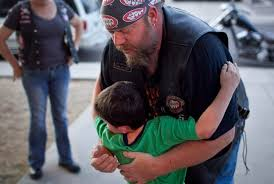
They just walked. Boots on pavement. Steady and quiet. The kind of presence that tells the world you’re not alone anymore.
When they reached the boy’s block, he stopped and looked up at them. His voice sounded stronger now.
“Thank you.”
The biker nodded. “Anytime.”
The motorcycles started up and rolled away, engines humming into the evening. The street returned to normal—cars passing, people moving on, the moment already fading for everyone else.
But not for the boy.
The Lasting Impact of a Few Minutes
That six-year-old went home knowing something important. Something he would carry longer than fear.
That even when you feel small and alone, someone might be watching.
That not everyone looks away.
That some people will step in when things aren’t right.
This story isn’t about intimidation or force. It’s about awareness, timing, and choosing to act without making things worse.
What This Teaches Us About Community
Too often, people hesitate because they don’t want to get involved. They assume someone else will step in. Or they convince themselves it’s not serious enough.
But danger doesn’t always announce itself loudly. Sometimes it whispers. Sometimes it looks like kids blocking a sidewalk and a smaller kid trying not to cry.
The bikers didn’t need to raise their voices. They didn’t need to threaten anyone. They used calm, numbers, and confidence to protect someone who couldn’t protect himself in that moment.
Why These Moments Matter More Than We Think
Kids remember who shows up for them. They remember who believes them. They remember who doesn’t laugh when they’re scared.
Those memories shape how safe the world feels later on.
And for adults watching nearby—whether they realized it or not—the moment sent a message too: paying attention matters.
Video : Bikers change lives of abused children
Conclusion: When Someone Chooses Not to Look Away
That afternoon could have ended like countless others. Another kid shaken. Another walk home filled with fear.
Instead, it ended with safety, dignity, and a reminder that community isn’t built by big speeches or rules—it’s built by ordinary people choosing to step in when something feels wrong.
Sometimes, the difference between fear and relief is just someone willing to slow down, notice, and stand in the way long enough to say, “Not today.”