Introduction: An Ordinary Morning That Changed Everything
It began like any other morning in a small American town. The kind of morning where coffee steams in thick mugs, engines tick as they cool, and laughter drifts out of a roadside diner just off the highway. A group of bikers had stopped in for breakfast, swapping road stories and planning their next ride. Nothing unusual. Nothing dramatic. Just another day on the road.
Then they noticed the kid.
A Child Standing Alone at the Bus Stop
Across the street, near a worn-out bus stop sign, stood a young boy with a backpack hanging off one shoulder. His head stayed low, like he hoped the ground might swallow him whole. His hands clutched the straps tight, knuckles pale, as if letting go meant falling apart.
A group of older kids walked by. They laughed. They shoved him. His books spilled across the sidewalk like discarded thoughts. One of them tossed out a cruel remark that hit harder than the shove ever could. The boy’s face flushed, his eyes burned, and his shoulders folded inward.
No teacher stepped in. No adult spoke up. The bus doors closed with a dull hiss and rolled away, leaving him behind—alone, shaking, trying not to cry in front of strangers.
When Someone Finally Notices
Inside the diner, one of the bikers—Ray—set his coffee mug down slowly. He hadn’t missed a thing.
“That kid rides this bus every day?” he asked the waitress.
She sighed and nodded. “Yeah. And yeah… it’s bad.”
That was all it took.
No speeches. No debate. Just a shared look between riders who’d lived long enough to know when something wasn’t right.
Presence Without Aggression
The bikers didn’t rush. They didn’t yell. They walked across the street together, boots heavy against the pavement. Sometimes, strength doesn’t need volume. Their presence alone shifted the energy of the block.
Video : Polk Place: Bikers Against Child Abuse
The bullies backed off quickly, suddenly finding reasons to be somewhere else.
Ray crouched down in front of the boy, bringing himself eye-level. His voice softened. “You okay, champ?”
The boy hesitated, then shook his head. Words came out in broken pieces—how the bullying had been happening for months, how mornings filled him with dread, how the bus ride felt longer than the entire school day.
Ray listened. Really listened. No interruptions. No fixing. Just understanding.
A Simple Gesture That Meant Everything
Ray stood and glanced back at the others. No discussion was needed. One of the bikers reached out and handed the boy his helmet. It was a little scratched, a little big, but solid.
“You ever ride to school in style?” he asked with a grin.
For the first time that morning, the boy cracked a small smile.
They didn’t take him back to the same school that day. Instead, they took him across town to another one—the school his family had already applied to, hoping for a safer start. The engines rolled slow and steady, like a moving shield. Cars pulled aside. People stared.
The boy sat tall on the back of the bike. Fear loosened its grip, replaced by something he hadn’t felt in a long time.
Confidence.
Walking Him to the Door
When they arrived, the bikers didn’t linger in the parking lot. They walked him straight to the front doors. Not intimidating. Not showy. Just supportive.
Ray knelt down one last time and looked the boy in the eye. “You don’t deserve to be treated like that,” he said. “And you don’t walk alone.”
Those words stuck.
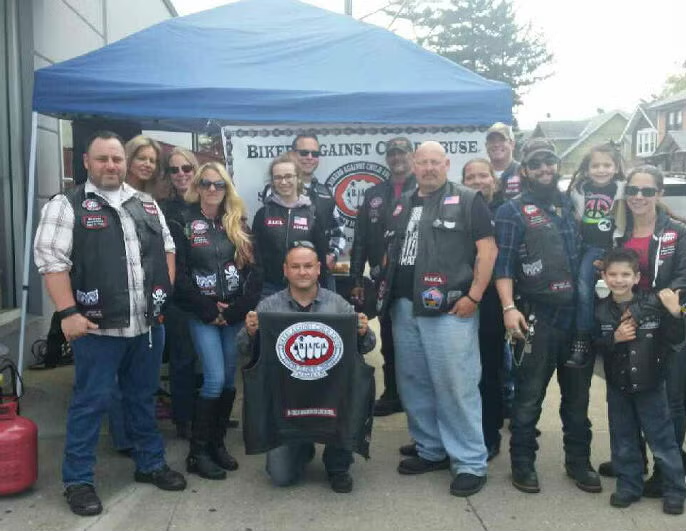
Why This Story Resonates So Deeply
Bullying often thrives in silence. It grows when people look away, when responsibility gets passed around like a hot potato no one wants to hold. This story matters because it breaks that cycle. It reminds us that protection doesn’t always come from systems or rules. Sometimes, it comes from ordinary people choosing to step in.
Bikers often get misunderstood. Leather jackets and loud engines can make people assume the worst. But many riders live by an unwritten code—watch out for the vulnerable, stand up when something’s wrong, and never leave someone behind.
The Power of Showing Up
Weeks later, the bikers still rode with the boy some mornings. Not because he needed protection anymore, but because knowing they were there gave him confidence. He walked taller. He smiled more. He stopped bracing for impact every time he left the house.
That’s the quiet power of showing up. You don’t just change a moment. You change how someone sees themselves.
A Different Kind of Freedom
People think bikers ride for freedom—and they’re right. But freedom isn’t just open highways and wind in your face. Sometimes, freedom is knowing you’re safe. Knowing you matter. Knowing someone will step in when things go wrong.
That morning at the diner, no one planned to change a life. But they did.
Video : Bikers Against Child Abuse: A Road to Empowerment and Safety for Abused Children
Conclusion: Sometimes the Ride Is About More Than the Road
This story isn’t about motorcycles or leather jackets. It’s about awareness, courage, and compassion. It’s about noticing a child who felt invisible and deciding that wasn’t acceptable. It’s proof that strength doesn’t always roar—it can walk quietly across a street and change everything.
Bikers like Ray don’t just ride for the thrill.
Sometimes, they ride to give a kid a fair shot at a future without fear.