A Quiet Diner Where the Night Felt Heavy
The highway diner was nearly empty, glowing softly under buzzing neon lights. It was the kind of place that stayed open for people who didn’t quite know where else to go. The smell of coffee mixed with cool night air, and the parking lot sat mostly silent under the stars.
A small group of American bikers pulled in, engines low, not looking for attention—just rest. Long rides have a way of draining you, especially after sunset. As one rider, Mike, swung his leg off his bike, something caught his eye.
A girl sat alone on a bench near the entrance.
She was too young to be there by herself. Maybe fourteen. Her oversized hoodie swallowed her hands, her head tilted down, hair hiding most of her face. She wasn’t scrolling on her phone. She wasn’t watching cars roll by.
She was staring at nothing.
Mike felt it immediately. Not danger in the obvious sense. No shouting. No chaos. Just something heavier. A silence that pressed down instead of passing through.
When Silence Says More Than Words
Mike didn’t approach her right away. He ordered coffee first and let the moment breathe. Then he sat on the far end of the bench, leaving space between them. Space matters when trust hasn’t formed yet.
“Long night?” he asked gently.
No answer.
That didn’t surprise him.
After a minute, he tried again. “You waiting on someone?”
Her voice came out barely above a whisper. “I don’t want to go home.”
Mike kept his eyes forward. No pressure. No sudden movements. “That happens sometimes,” he said calmly.
She nodded, almost invisible. Her hands tightened inside her sleeves.
“I’m tired,” she said. “All the time.”
That sentence landed hard.
Mike had heard it before—not on the road, but in hospital waiting rooms, from people fighting battles no one else could see. The kind of tired that sleep doesn’t fix.
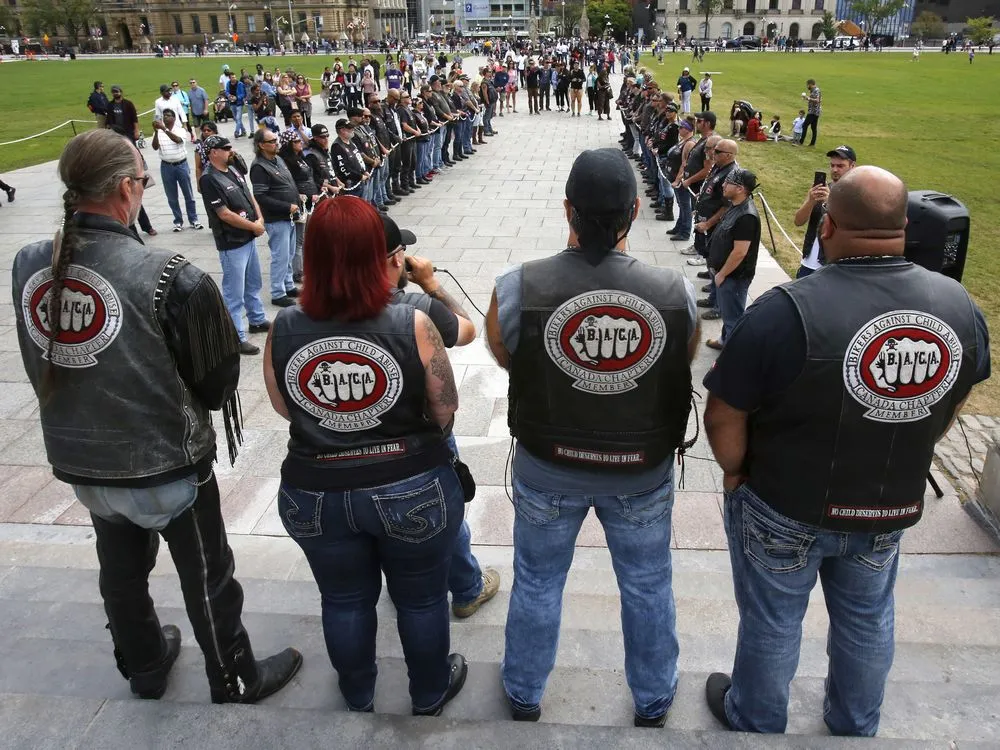
Video : Bikers Against Child Abuse Go To Deacon’s Hearing
Listening Without Trying to Fix Everything
“You wanna tell me what’s been making it feel heavy?” Mike asked.
She shook her head. Then, after a long pause, she spoke anyway.
“I don’t want to be here anymore.”
Mike didn’t flinch. He didn’t rush to argue or minimize what she said. He didn’t panic.
Instead, he turned toward her slowly. “I’m really glad you said that out loud,” he said. “That takes courage.”
Her eyes filled, but she didn’t cry. “I didn’t know who else to tell.”
“You told the right person,” Mike replied. “And we’re not handling this alone.”
Those words mattered. They shifted the moment from isolation to connection.
Knowing When to Get Help Right Away
Mike quietly signaled one of the other bikers, who stepped away to make a call for guidance. No drama. No crowd. Mike stayed right there, his presence steady, like an anchor holding things in place.
“You’re not broken,” he told her. “Your brain is hurting. That’s not the same thing.”
She finally looked at him. Really looked. “What if it doesn’t stop?”
Mike nodded, acknowledging the fear. “That’s why we get help tonight. Not later. Not someday. Tonight.”
He asked her one simple question. “Would you be okay if I stayed with you while we go somewhere safe? Somewhere people know how to help when things feel this dark?”
She hesitated. Then nodded.
That nod changed everything.
The Ride That Was About Presence, Not Speed
They rode in silence, the night air cool and steady against their faces. Mike didn’t talk the whole way. He didn’t fill the quiet with advice or stories.
Sometimes presence matters more than words.
The road stretched ahead, dark and open, like it always does at night. But this time, it felt like it was leading somewhere that mattered.
Inside an Emergency Mental Health Center
At the emergency mental health center, the staff moved quickly—but gently. There was no judgment in their voices. No rushing her through the process. Just calm, practiced care.
Mike stayed until she was checked in. Until a counselor sat with her. Until she nodded again—this time with relief instead of fear.
Before they took her back, she turned toward him.
“You didn’t act like I was a problem,” she said.
Mike smiled softly. “Because you’re not.”
Those words landed like permission to breathe.
Why Bikers Often Notice What Others Miss
People often think bikers are only about speed, noise, and leather jackets. What they don’t see is the awareness riding demands. On a motorcycle, you learn to read environments fast. You notice posture, silence, hesitation.
You learn that danger isn’t always loud.
That mindset doesn’t shut off when the engine does.
Mike didn’t see a stranger on a bench. He saw someone who needed help now, not later.
Real Strength Looks Like Asking for Help
There’s a myth that strength means handling everything on your own. But real strength often looks quieter. It looks like listening. Like staying. Like guiding someone to support instead of trying to carry everything yourself.
Mike didn’t try to fix her pain. He didn’t pretend to have answers.
He just made sure she wasn’t alone with it.
Video : BACA: Bikers Against Child Abuse
Conclusion: One Choice Can Keep a Life Going
This story isn’t just about a biker or a late-night diner. It’s about awareness, compassion, and knowing when to take action.
One life didn’t end that night.
Because someone noticed the silence, took it seriously, and chose to drive toward help instead of away from it.
Sometimes, that single choice is enough to keep hope alive—long enough for healing to begin.