A Festival Full of Noise—and One Silent Crisis
The festival had been loud since noon. Music thumped from every corner. Vendors shouted orders over sizzling grills. People moved shoulder to shoulder, laughing, dancing, soaking in the energy like it would never end.
It felt alive. Electric. Safe.
Until it wasn’t.
A sudden crash exploded near the main stage. No one knew what caused it. A speaker might have fallen. Fireworks could have misfired. The details didn’t matter. Panic spreads faster than facts, and within seconds the crowd surged.
People screamed.
Parents grabbed children.
Bodies pushed in every direction at once.
Excitement turned into chaos.
The Girl No One Else Could Hear
In the middle of it all, the biker saw her.
She stood frozen near a food truck, small hands pressed tightly over her ears even though she couldn’t hear the noise. Her eyes were wide, scanning faces that rushed past her like water around a rock.
She wasn’t reacting to sound.
She was reacting to fear.
She was deaf.
And she was alone.
The Moment Experience Took Over
The biker had been volunteering at the event, his motorcycle parked safely at the edge of the festival grounds. His leather vest was faded from years on the road. He felt the shift in the crowd immediately—the dangerous kind, when fear takes control and people stop noticing what’s beneath their feet.
That’s when he locked onto her.
He didn’t shout.
He didn’t grab.
He didn’t panic.
He moved with intention.
Speaking Without Sound
He pushed through just enough bodies to reach her and dropped to one knee so they were eye level. His movements were slow. Predictable. Non-threatening.
Then he raised his hands and signed carefully:
It’s okay. I’m here.
The girl’s breathing stuttered. She stared at his hands, then at his face. Recognition cut through her fear like a light turning on.
He signed again, calmer now.
You’re safe. Follow me.
Tears filled her eyes as she nodded.
In that instant, the chaos faded for her. Someone was finally speaking her language.
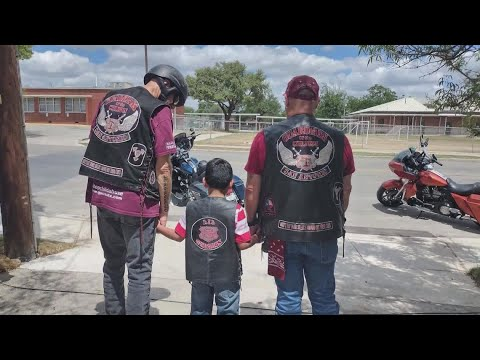
Video : Polk Place: Bikers Against Child Abuse
Creating Calm Inside the Storm
The biker stood and positioned himself between the girl and the surging crowd. With one hand, he signaled people to stop. With the other, he kept his palm open toward her so she could focus only on him.
He didn’t pull her.
He guided her.
Step by step, he signed simple instructions while they moved.
This way.
Slow.
Look at me.
People shoved and shouted around them, but the biker used his size and steady posture to create a pocket of calm. He kept signing the entire time so she never had to look anywhere else.
Fear loses power when someone stays calm beside you.
Reaching Safety Without a Single Word
When they reached the edge of the crowd, the biker guided her behind a barricade and toward his motorcycle, parked far from the chaos. The noise dropped instantly. The air felt different here—lighter.
He crouched again and signed:
You’re out. You did great.
The girl collapsed into a sob of relief, clutching his vest with shaking hands.
She was safe.
A Mother’s Panic Turns Into Gratitude
Moments later, a woman ran toward them, her face pale, hands trembling as she searched frantically. The girl saw her and broke free, running straight into her arms.
Her mother cried openly, signing rapidly as she held her daughter close.
The biker stepped back, giving them space.
Then the mother turned to him, tears streaking down her face, and signed:
Thank you. Thank you for seeing her.
He touched his chest gently and signed back:
Anyone would have helped.
They both knew that wasn’t true.
Why Awareness Matters in Emergencies
In emergencies, people rely on sound—shouts, alarms, sirens. But not everyone can hear them. Deaf and hard-of-hearing individuals often face greater danger in chaotic situations because instructions aren’t accessible.
This biker didn’t just notice a child in trouble. He recognized how she experienced the world—and adapted instantly.
That’s not luck.
That’s awareness.
American Bikers and Situational Awareness
American bikers live by awareness. On the road, survival depends on reading subtle changes—shifts in traffic, body language, sudden movement. You learn to stay calm when things go wrong.
That instinct doesn’t shut off when the engine stops.
In this moment, it became a lifeline.
A Rescue Most People Never Saw
As sirens wailed in the distance and the crowd slowly settled, the biker walked back toward his motorcycle. No one clapped. No cameras followed him. Most people never even realized what had happened.
But one little girl left that festival knowing something important.
In the middle of fear and noise, someone spoke her language—
and led her to safety without making a single sound.
Video : Bikers Against Child Abuse works to help kids
Conclusion: Sometimes the Loudest Help Is Silent
This wasn’t a dramatic rescue. There were no flashing lights or heroic speeches. Just a calm presence, moving hands, and the power of being understood.
Safety doesn’t always arrive shouting orders.
Sometimes it kneels down, makes eye contact, and says, I see you.
That day, one American biker proved that knowing how to communicate can be just as powerful as strength—and sometimes, it saves a life in silence.