Flying With a Mission, Not Just Thrills
Jack “Ironhide” Walker wasn’t your typical pilot. A rugged American biker at heart, he wasn’t soaring through the skies for adrenaline. Today, he was helping a friend transport some cargo in a small plane. The sun glinted off his leather helmet as it rested on the seat beside him, casting reflections across the cockpit. Everything seemed routine—until he heard it.
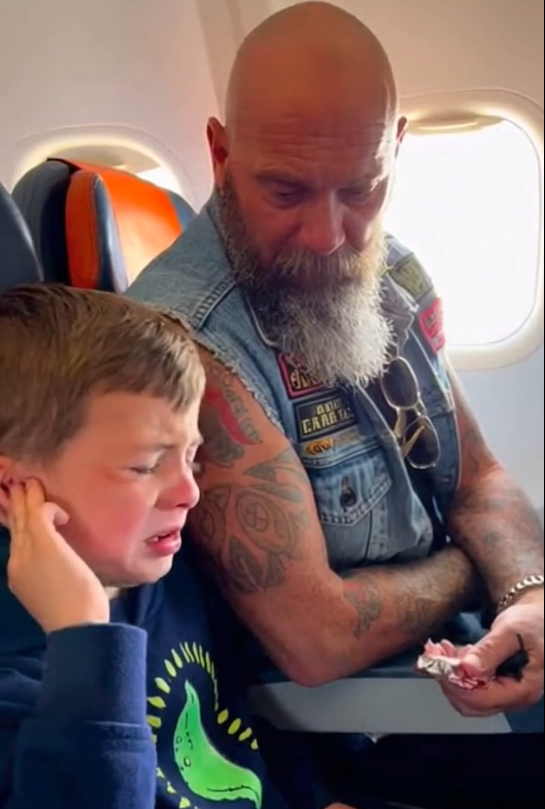
The Sound That Stopped Him
A soft, high-pitched whimper from the backseat cut through the hum of the engine. Jack turned, spotting a boy barely seven years old, his face scrunched in pain, tears welling up.
“Ear hurts?” Jack asked, his voice calm yet firm over the engine’s roar.
The kid nodded, blinking rapidly. Jack knew that pain all too well. Sudden changes in air pressure could make your ears feel like they were about to burst, and he hated it himself—even though he’d never admit it.
Quick Thinking in the Sky
Without missing a beat, Jack reached into his pocket and pulled out a pack of gum. “Here,” he said, offering a piece. “Chew it. Swallow. Like this.”
He demonstrated slowly, exaggerating the motion so the boy could follow. “Chew… then swallow. It keeps your ears from popping too hard.”
Video : Meet the Bikers Riding to the Rescue of Bullied Children | This Morning
Teaching the Smallest Gestures
The boy mimicked Jack, concentration written all over his face. After a few attempts, the grimace softened. “It… it helps,” he whispered.
Jack nodded, a small grin forming. “See? Nothing to worry about. You’re tougher than you think.”
The Science Behind Chewing Gum at Altitude
When planes ascend or descend, air pressure changes rapidly. For young children, these shifts can be uncomfortable or even painful. Chewing and swallowing activates the Eustachian tubes, helping equalize the pressure between the inner ear and the cabin. Jack’s simple act wasn’t just comforting—it was practical first aid in action.
Patience and Vigilance: The Key to a Calm Flight
As the flight continued, Jack kept a close watch on the boy. Every time he swallowed correctly, Jack gave a thumbs-up.

The hum of the engine mixed with the soft pops of the boy’s ears adjusting, creating a rhythm of reassurance and control. By the time the plane descended toward the small airstrip, the child’s fear had faded completely, replaced by smiles and curiosity.
The Power of Small Gestures in Everyday Life
When Jack removed his helmet after landing, he ran a hand through his hair, reflecting on the flight. Flying wasn’t about thrill-seeking; it was about responsibility and watching out for those around you—even if it meant something as simple as handing over a piece of gum and demonstrating how to chew and swallow.
Why Moments Like These Matter
It’s easy to underestimate the impact of small, thoughtful actions. A simple intervention, like teaching a child how to handle ear pressure, can prevent pain, reduce fear, and even create lasting memories. Jack’s attentiveness transformed a stressful flight into a positive, memorable experience for the boy—a reminder that care and patience can go a long way.
Video : These bikers help abused kids to no longer live in fear
Conclusion: Lessons From High Above the Clouds
Jack “Ironhide” Walker’s flight shows that heroism doesn’t always need drama or danger. Sometimes, it’s the small acts—the patience, the guidance, the human connection—that make the biggest difference. From a simple pack of gum to a few words of encouragement, the smallest gestures in life can have the most profound impact, proving that compassion isn’t just seen in grand acts, but in quiet, thoughtful moments.