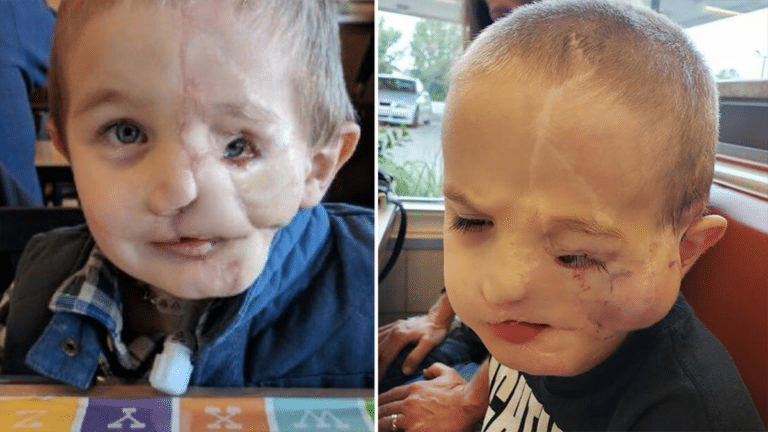
Some stories are not remembered because they are loud.
They stay with us because they are quiet, human, and deeply tender. They remind us of the values many American families were raised with: be gentle with children, help your neighbors, respect those who are different, and never judge a person by what you see on the outside.
Ryder Wells’ story is one of those stories.
When Ryder was very young, his life changed after a serious accident involving dogs while his family was visiting friends around the Thanksgiving season. What should have been an ordinary family holiday became the beginning of a long and difficult road through hospitals, recovery, and adjustment.
But this story is not defined by that single day.
It is defined by what came after.
Ryder survived. He kept growing. He went to school. He played. He made friends. He learned to live with courage far beyond his years. And perhaps most importantly, he reminded the adults around him that children often carry more strength than anyone expects.
For many parents and grandparents, Ryder’s story touches something very personal. Every family understands how quickly life can change. One ordinary afternoon can become a memory that divides time into “before” and “after.” A parent can spend years wondering how to protect a child from pain, fear, or the unkindness of others.
Ryder’s mother, Brittany, has spoken openly about the emotional weight of watching her son recover while also helping him face a world that does not always understand difference. According to earlier reports, Ryder was active, attending school, and enjoying many of the same things as other children his age, even as his family continued to support him through medical care and daily challenges.
That is the heart of the story.
Video Ryder Wells’ Story Reminds Families Why Kindness Still Matters
Ryder is not only a child who survived something difficult. He is a child who continued living.
And that distinction matters.
Too often, people see only what is visible. They notice a scar, a medical difference, a wheelchair, a limp, a hearing aid, a facial difference, or anything that does not match what they expect. They stare. Sometimes they whisper. Sometimes, sadly, they say something careless without thinking about the person who has to hear it.
For a child, those moments can be especially painful.
A playground should be a place of laughter. A grocery store should be ordinary. A school hallway should feel safe. But for children who look different because of illness, injury, disability, or medical treatment, even simple public places can become difficult when others react without kindness.
That is why Ryder’s story has touched so many people.
It asks a simple question: What kind of world do we want our children to grow up in?
Most parents teach their children to say please and thank you. They teach them to look both ways before crossing the street. They teach them to share toys, hold doors, and respect elders. But Ryder’s story reminds families of another lesson that may be just as important: teach children not to stare, mock, or fear someone simply because they look different.
A child who looks different is still a child.
He wants to play. He wants to laugh. He wants friends. He wants to be included. He wants to walk into a room without becoming the subject of every stranger’s curiosity.
That is a lesson older generations often understand deeply.
Many Americans grew up in neighborhoods where people knew one another. If a family was struggling, someone brought a casserole. If a child was sick, neighbors asked how they could help. If someone came home from the hospital, the community noticed. That older sense of neighborly care is something many people still miss today.
Ryder’s recovery brought that kind of care back into focus. Local reports described community efforts, fundraising, and support from people who wanted to help his family through a long medical journey. A restaurant owner in North Carolina, moved by Ryder’s spirit, helped raise funds for his care, showing how one child’s courage could inspire adults to act with generosity.
That kind of kindness may not make the world perfect, but it makes the road less lonely.
For families dealing with long-term medical care, support matters in practical ways. It can mean help with travel, meals, appointments, bills, childcare, and emotional exhaustion. It can also mean something simpler: knowing that people have not forgotten you.
Ryder’s story also carries an important message about pet safety.
Many American families love dogs. They are companions, protectors, walking partners, and beloved members of the household. But children and animals must always be supervised with care, even when a pet has seemed gentle in the past. Brittany Wells has emphasized the importance of caution around animals, reminding others that accidents can happen and that awareness can help protect children.
That message is not about fear. It is about responsibility.
Grandparents know this well. The family dog may be sweet, but toddlers move quickly. They do not always understand boundaries. They may open doors, reach for food, surprise an animal, or wander into places adults did not expect. A few extra seconds of attention can matter.
Still, the larger lesson of Ryder’s story is not only about safety. It is about compassion.
Years after the accident, his mother described him as a child who wanted to do what other children do. He wanted to learn, play, explore, and be part of everyday life. That is something every family can understand. Children do not want to be defined by hardship. They want to be seen for who they are.
And Ryder, by all accounts, is much more than what happened to him.
He is a son. A brother. A student. A child with personality, curiosity, and a future. He is part of a family that has chosen love, patience, and hope through a season no parent ever asks to face.
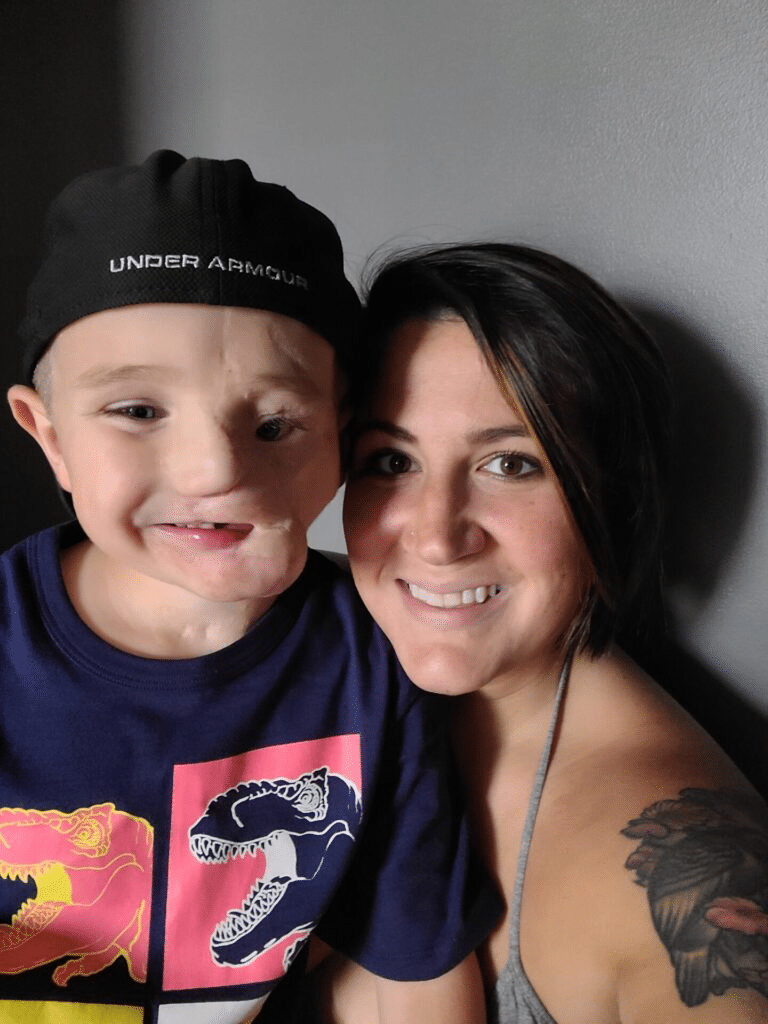
For older American readers, this story may bring back memories of raising children in a different time—when a scraped knee, a hospital visit, or a schoolyard comment could keep a parent awake at night. It reminds us that childhood is precious and fragile, but also full of remarkable resilience.
Children can surprise us.
They can endure more than adults think possible. They can laugh after long days. They can find joy in small things. They can teach grown-ups how to keep going.
Ryder’s journey is not a story to be read with pity. It is a story to be read with respect.
Respect for a child who continued forward.
Respect for a mother who kept speaking up.
Respect for doctors, nurses, teachers, neighbors, and friends who helped along the way.
And respect for every child who has ever walked into the world looking a little different and still deserved to be greeted with warmth.
In the end, Ryder’s story leaves us with a simple reminder: kindness is not complicated.
It is teaching a child to say hello instead of staring.
It is telling someone they are welcome.
It is choosing gentle words.
It is remembering that every face has a story, every family carries private struggles, and every child deserves dignity.
Ryder Wells may have been very young when his journey began, but the lesson he offers is timeless.
A strong community is not measured by how it treats people who look familiar.
It is measured by how it treats those who need a little extra understanding.
And sometimes, the smallest child can teach the biggest lesson.